Bridging Base-Station-Free Handheld Radios and SIP Paging with the Algo 8312
Learn how the Algo 8312 bridges SIP paging with compatible base-station-free radios, analog paging systems, IP endpoints, and automated communication workflows.
Estimated reading time: 5 minutes
Overview
Many organizations rely on multiple communication systems to keep teams connected. While office staff may use phones, messaging applications, and other devices connected to a Unified Communications (UC) platform, frontline workers often rely on handheld radios for instant, mobile communication.
The challenge is ensuring announcements reach everyone, regardless of the communication device they’re using.
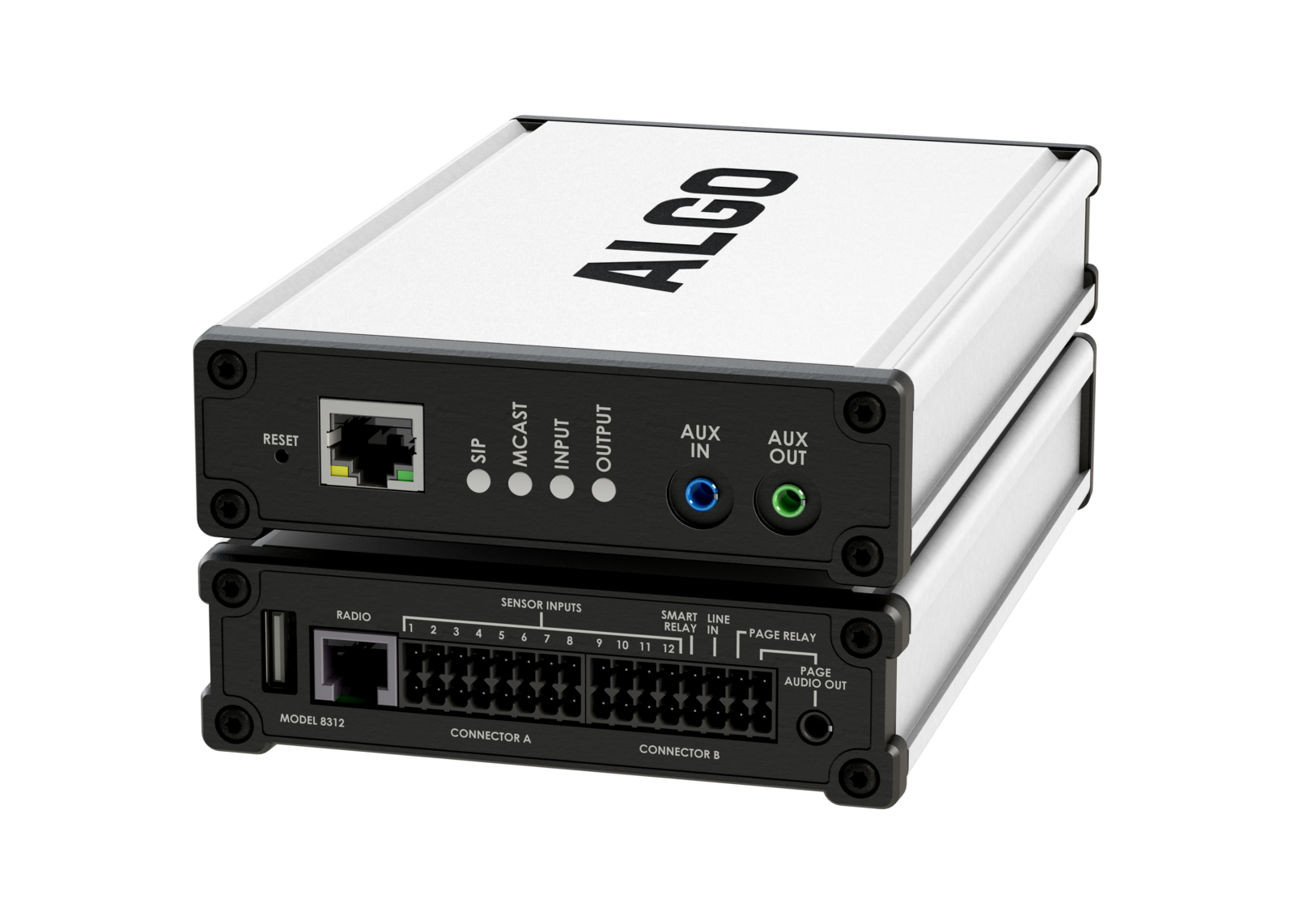
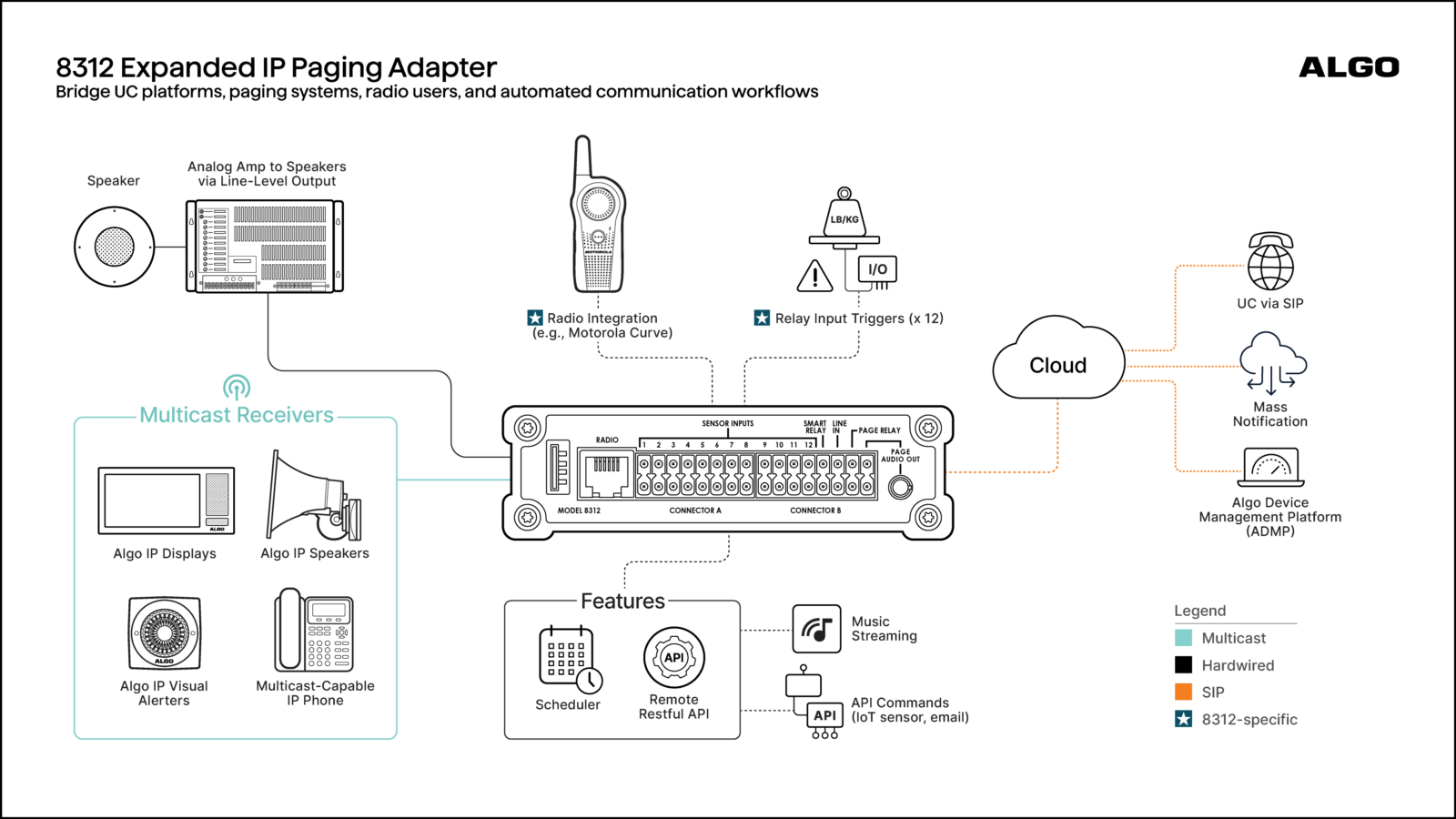
The Algo 8312 Expanded IP Paging Adapter bridges this gap by connecting SIP-based UC platforms, analog paging systems, compatible handheld radio systems, and automated communication workflows into a single network-connected device.
Why Connected Communications Matter in Retail and Beyond
In retail, associates rarely work behind a desk. Managers, inventory teams, customer service associates, and loss prevention staff often use handheld radios to communicate, while office staff use desk phones, messaging applications, analog or IP speakers, and other devices connected to their UC platform.
By connecting these systems together, organizations can improve operational efficiency, reduce response times, and deliver more consistent communications across the facility.
Although the Algo 8312 was designed with retail commununication needs in mind, the same challenges exist in many other environments, including:
- Warehouses and distribution centres
- Manufacturing facilities
- Healthcare environments
- Educational campuses
- Municipal facilities
- Transportation hubs
In each case, the objective remains the same: ensure important communications reach every employee through the devices they already use.
How the Algo 8312 Connects SIP Paging and Base Station-Free Radios
The Algo 8312 Expanded IP Paging Adapter extends communication beyond desk phones and traditional speaker coverage.
Optimized for integration with base-station-free handheld radio systems, the 8312 connects to a compatible donor radio and extends SIP audio across the radio network.
That means the same announcement can be distributed simultaneously to compatible handheld radios (e.g., Motorola Curve), existing analog overhead paging systems, Algo IP devices, and compatible multicast endpoints.
Instead of managing these systems independently, organizations can deliver one announcement across multiple communication channels.
Please note that while Motorola Curve is currently supported, integration with other handheld radio systems may also be possible, depending on radio system compatibility and cabling requirements. Contact Algo to discuss compatibility with other handheld radio systems.
How Does the Algo 8312 Compare with Other Algo IP Paging Adapters?
The Algo 8312 shares the same form factor as the Algo 8301 Paging Adapter & Scheduler and builds on many of the same core capabilities, including:
- SIP-based paging
- Amplifier integration
- Smart relay control
- Built-in scheduling
- RESTful API support
- Music streaming
- Algo Device Management Platform (ADMP) supervision
What differentiates the 8312 is three additional capabilities that support more advanced communication and automation workflows:
- Base-station-free handheld radio integration: Connects to a compatible donor radio, activates its push-to-talk function, and transmits SIP audio across the peer-to-peer radio network.
- Twelve configurable sensor inputs: Enables external devices such as buttons, switches, contact closures, and sensors to trigger automated communication workflows.
- USB port: Provides flexibility to support additional capabilities in the future.
Although it may be possible to use the 8312 with radio systems that have a base station or control unit, the Algo 8301 is generally the preferred, more cost-effective solution for those deployments.
Please note, many Algo paging adapters support radio integration. The right model depends on the radio architecture, existing infrastructure, cabling requirements, and desired communication workflows.
View the Algo IP Paging Adapter Comparison or contact Algo to determine which paging adapter is best suited to your application.
Protecting Existing Paging Investments
Many organizations have already invested in analog amplifiers and legacy technology, so replacing existing infrastructure simply to add radio integration isn’t often practical.
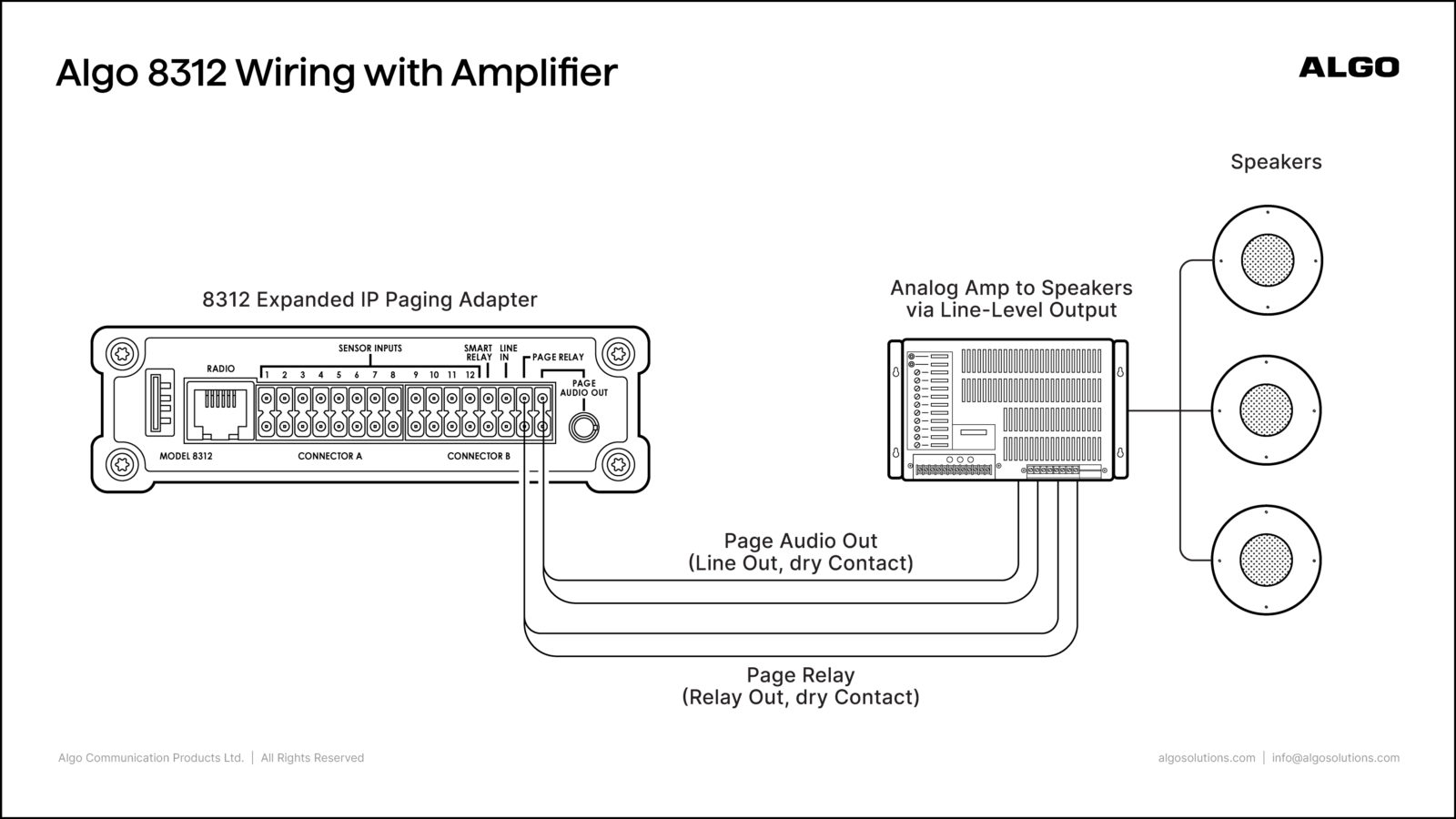
The Algo 8312 helps organizations modernize without replacing existing paging systems by connecting directly to analog amplifiers through its line-level audio output while simultaneously distributing announcements to compatible handheld radios and IP endpoints.
This allows organizations to gradually modernize communications while protecting existing investments.
Applications and Real-World Use Cases
Let’s imagine a large retail store during peak shopping hours. A customer requires assistance with a high-value product located in a secure department.
The department manager initiates a SIP page through their supported UC environment, such as Microsoft Teams or Cisco.
Instead of only reaching desk phones, the Algo 8312 distributes the announcement simultaneously to radio users, existing overhead speakers, and Algo IP displays.
Employees receive the same message through the device they already use, helping reduce delays and improve customer response times.
Communication can also be triggered through the 8312’s configurable sensor inputs. Some examples include:
- A stockroom panic button triggering alerts to handheld radios and overhead speakers.
- A receiving dock sensor announcing delivery arrivals.
- A freezer alarm notifying maintenance staff through radios and IP speakers.
- A loading dock door triggering a scheduled announcement after hours.
Because these workflows are managed by the same device that handles paging and radio integration, organizations can reduce their reliance on separate paging, radio, and automation controllers across the facility.
Bringing Every Communication Channel Together
Effective communication depends on reaching employees through the devices they use, whether they are working at a desk, moving throughout a facility, or monitoring operational systems.
By bridging SIP-based UC platforms, compatible handheld radios, analog paging systems, Algo IP endpoints, and automated workflows, the Algo 8312 helps organizations protect existing infrastructure and deliver more consistent and timely communications.
View Algo 8312 Expanded IP Paging Adapter →
Key Takeaways
- The Algo 8312 Expanded IP Paging Adapter connects SIP-based UC platforms with handheld radios and analog systems for seamless communication.
- It offers integration with base-station-free radios, enabling simultaneous announcements via various channels.
- The Algo 8312 modernizes communication without replacing existing infrastructure, thus protecting past investments.
- It supports customizable automation workflows through sensor inputs, streamlining operations and improving response times.
FAQs
What is an IP paging adapter?
An Algo IP paging adapter connects SIP-based Unified Communications platforms to analog technology, paging systems, and other communication endpoints. View Algo paging adapter comparison here.
How can organizations connect office-based and mobile teams?
The Algo 8312 Expanded IP Paging Adapter connects SIP-based UC environments, existing analog paging systems, compatible handheld radio systems, Algo IP endpoints, and communication workflows through one network-connected device.
How does the Algo 8312 connect handheld radios to an overhead paging system?
The Algo 8312 connects to an analog amplifier through its line-level audio output and to a compatible donor radio. A SIP announcement can then be distributed through both the overhead paging system and the radio network.
How do you integrate Motorola Curve radios with Microsoft Teams?
In a supported SIP-connected Microsoft Teams deployment, the Algo 8312 can receive a SIP page and transmit the audio through a connected Motorola Curve donor radio, in addition to existing paging infrastructure and compatible IP endpoints.