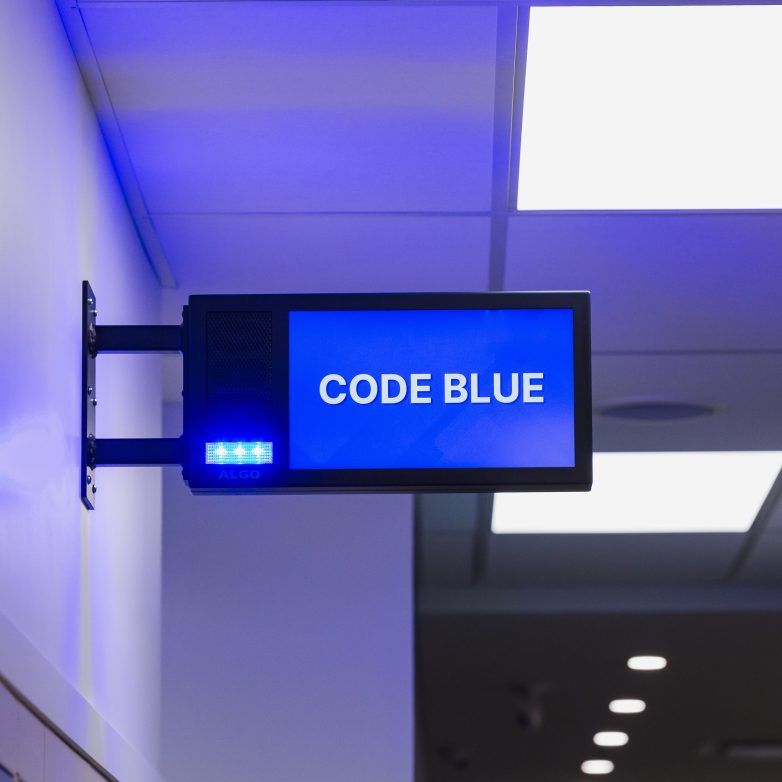
School Safety Communications: Daily Use and Critical Moments
Learn how modern communication systems and safety legislation shape day-to-day messages and emergency responses across education environments.

Overview
Communication systems in schools and campuses play a critical role beyond daily announcements. Education environments rely on these systems to support routine operations, coordinate staff, and respond effectively during emergencies. As schools and campuses grow larger and more interconnected, expectations around communication reliability, visibility, and response continue to increase.
At the same time, evolving safety legislation and regulatory requirements are shaping how educational institutions approach emergency communications, location awareness, and staff-initiated response. This article explores how safety requirements, operational needs, and modern communication technologies come together to form today’s education communication ecosystem.
Safety and Compliance in Education Environments
Education communication systems are increasingly shaped by safety legislation aimed at improving emergency response and situational awareness. While specific requirements vary by region, these laws share a common goal: ensuring emergency communications are clear, actionable, and provide responders with accurate information as quickly as possible.
In the United States, Kari’s Law and the Ray Baum’s Act address emergency calling from multi-line telephone systems commonly used in schools and campus environments. Kari’s Law requires that emergency calls be placed directly, without dialing a prefix.
The Ray Baum’s Act builds on this by requiring systems to provide a dispatchable location with emergency calls, such as a building, floor, or room number. Together, these laws are intended to reduce response times and improve location accuracy in large or multi-building school environments.
Alyssa’s Law applies specifically to public elementary and secondary schools in states where it has been enacted. Under Alyssa’s Law, schools are required to implement panic alert systems that allow staff to initiate emergency notifications and support faster situational responses during critical incidents.

In the United Kingdom, Martyn’s Law focuses on improving preparedness and response in public venues, including educational settings, by emphasizing emergency planning, communication, and situational awareness.
While some of these regulations apply more broadly to multi-building and campus-style environments, they are particularly relevant to schools and campuses due to their size, occupancy, and emergency response requirements.
Explore More Regulatory Compliance →
Common Challenges in School Communications
Education environments face a unique set of communication challenges driven by scale, complexity, and evolving expectations. Many schools operate across multiple buildings and campuses, each with different acoustic conditions, visibility requirements, and usage patterns.
Legacy communication systems often struggle to support modern needs, particularly when schools attempt to expand coverage, improve emergency readiness, or integrate new capabilities. At the same time, schools increasingly rely on unified communication platforms such as Microsoft Teams, Zoom, or other VoIP systems for daily operations, creating challenges when paging, alerting, and access control systems operate separately from the UC environment.

This fragmentation can make systems harder to manage, slow response during emergencies, and limit the ability to deliver consistent messaging across classrooms, common areas, and outdoor spaces. Administrators are often tasked with improving safety and communication effectiveness while minimizing disruption to existing infrastructure and day-to-day workflows.
Key Considerations for School Administrators
When evaluating or upgrading communication systems, school administrators should consider:
- How emergency alerts provide accurate location and context
- How staff can initiate alerts quickly and confidently without technical complexity
- How audible and visual notifications work together across different spaces
- How systems integrate with existing UC platforms (Teams, Zoom, etc.)
- How schools can transition from analog paging to a hybrid or full IP system
- How communication infrastructure scales across campuses and facilities
These considerations help ensure that communication systems support both everyday operations and emergency alerting.
Practical Approaches to Modern School Communication
To address these challenges, schools are increasingly adopting IP-based communication systems designed for flexibility, integration, and scale. Across North America, education institutions are moving away from siloed paging and alerting systems toward network-based solutions that integrate more easily with existing IT and UC environments.
IP-based systems support centralized management, flexible zoning, and layered alerting strategies that combine audible announcements, visual messaging, and staff-initiated alerts. By leveraging the school’s network and UC platforms, schools can streamline communication workflows, improve visibility during emergencies, and reduce operational complexity.
This approach allows education institutions to enhance communication coverage and responsiveness while integrating with existing infrastructure and adapting to evolving safety and compliance requirements.
How Communication Works Across Schools and Campuses
The modern education communication ecosystem extends well beyond bells and announcements. It includes daily operational messaging, emergency notifications, visual alerts, and staff-initiated communications that support rapid response during critical situations.
Schools operate across diverse environments, including classrooms, hallways, cafeterias, gymnasiums, administrative offices, and outdoor areas. Each space presents different acoustic, visibility, and response challenges, requiring flexible communication approaches rather than a single, uniform solution.

How Algo Supports Schools and Campuses
Algo designs IP communication endpoints that support schools and campuses across both everyday operations and emergency response scenarios. Algo solutions are built to integrate with leading UC platforms and existing infrastructure, allowing education institutions to unify paging, alerting, and access communication within a single, scalable system.
By supporting voice paging, emergency notification, loud ringing, visual notification, and secure door entry, Algo enables schools to address communication needs across classrooms, hallways, common areas, and entry points. This application-based approach allows schools to deploy the right endpoints in the right locations while maintaining centralized management and consistent operation across the campus.
Together, these capabilities help schools build a flexible communication ecosystem that supports daily operations, enhances emergency readiness, and aligns with evolving safety and compliance expectations.